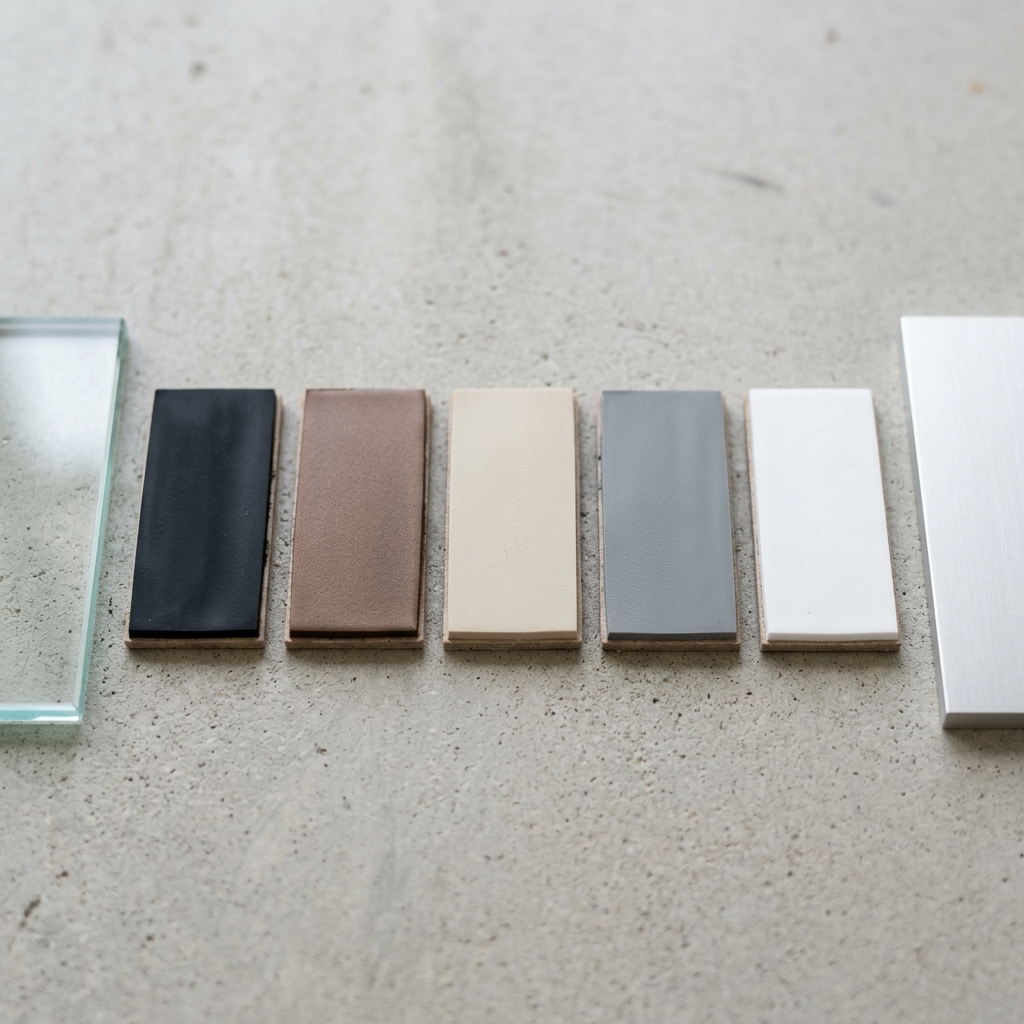
DOWSIL 795 Color Guide: Palette, Specs & Selection
Selecting an architectural sealant for a commercial building envelope requires balancing dynamic structural mechanics with long-term visual harmony. When engineering a unitized curtain wall, structural silicone glazing (SSG), or exterior expansion joints, visual performance is directly tied to the polymer chemistry beneath the surface.
DOWSIL™ 795 Silicone Building Sealant (formerly known as Dow Corning 795) represents the global standard in high-performance silicone technology. However, specifying this material goes beyond load capacities and elongation percentages. Choosing the correct factory color ensures the building envelope maintains aesthetic continuity under decades of extreme ultraviolet (UV) radiation and atmospheric weathering.
This comprehensive guide details the factory-standard color palette of DOWSIL 795, the chemistry dictating its cured visual finish, substrate integration strategies, and the technical parameters specifiers must evaluate before issuing a procurement order.
What Is DOWSIL 795? Formulation, Finish, and Visual Performance
DOWSIL 795 is a one-part, neutral-cure, architectural-grade silicone elastomer engineered for dynamic joint movement (±50%) and structural glazing applications. Because it cures upon exposure to atmospheric moisture, the cross-linking process produces a durable, rubberized seal that bonds tenaciously to glass, metal, stone, and composite panels.
+-------------------------------------------------------------------------------+
|                       DOWSIL 795 CURED VISUAL PROFILE                         |
+----------------------+--------------------------------------------------------+
| Surface Sheen        | Smooth, Low-Gloss / Semi-Matte Architectural Finish   |
| Optical Density      | 100% Opaque (High-Density Mineral Pigmentation)        |
| Standard Packaging   | 10.3 oz (305 ml) Cartridges / 20 oz (590 ml) Sausages  |
| Non-Bleeding Class   | Non-Staining / Fluid Migration Resilient               |
| UV Discoloration     | Inert Siloxane Backbone; Zero Visible Chalking         |
+----------------------+--------------------------------------------------------+
Aesthetic Properties of Cured Silicone
Unlike consumer-grade caulks that dry with an uneven sheen, DOWSIL 795 cures to a consistent, smooth, semi-matte finish. This low-reflectance profile prevents unwanted specular glare along exterior joints, allowing the sealant bead to blend cleanly into anodized metals, coated extrusions, and porous stone facades.
The “No-Clear” Engineering Rule
A frequent misconception among procurement teams is the expectation of a “Clear” or “Translucent” version of DOWSIL 795. DOWSIL 795 is intentionally not manufactured in clear.
Achieving compliance with structural glazing specifications—specifically ASTM C1184—requires high loadings of reinforcing inorganic fillers and specialized pigments. These additives deliver the necessary tensile adhesion, tear resistance, and UV-blocking stability required to anchor glass lites to structural framing. Projects requiring a clear silicone sealant must use specialty non-structural or specialty glazing formulations, such as DOWSIL™ 799 or 999-A, provided the design does not mandate ASTM C1184 structural validation.
The Standard DOWSIL 795 Architectural Color Palette
Dow produces DOWSIL 795 in 11 factory-standard colors. These shades are chemically calibrated to align with standard architectural metals, fluoropolymer coatings (such as Kynar 500®/Hylar 5000®), painted aluminum composites, and natural quarried masonry.
+------------------+------------------------------+---------------------------------------+
| COLOR NAME       | VISUAL PROFILE               | TYPICAL SUBSTRATE MATCHES             |
+------------------+------------------------------+---------------------------------------+
| Black            | Deep, non-reflective jet     | Dark anodized framing, structural SSG |
| Bronze           | Deep earth tone with brown   | Medium-to-dark bronze anodized metal  |
| Aluminum         | Medium neutral metallic gray | Clear anodized aluminum, mill finish  |
| Gray             | Solid industrial cool gray   | Precast concrete panels, zinc facades |
| White            | Bright, clean true white     | PVDF white panels, spandrel glass     |
| Precast White    | Soft, off-white muted tone   | White precast concrete, limestone     |
| Limestone        | Light sand-tinted warm gray  | Cast stone, Indiana limestone, mortar |
| Sandstone        | Warm earth-toned beige       | Sandstone panels, tan brick, stucco   |
| Adobe Brown      | Reddish-brown terracotta     | Terracotta tiles, red brickwork       |
| Natural Stone    | Muted brownish-gray neutral  | Granite slabs, travertine, slate      |
| Champagne        | Warm light-metallic gold     | Champagne anodized curtain wall mullions |
+------------------+------------------------------+---------------------------------------+
Specifying Standard Colors by Architectural Application
- Structural Glazing Lines (SSG): Black serves as the undisputed industry standard for structural spacer-bite applications. Its optical density blocks all back-edge visual interference while providing the highest theoretical UV barrier for perimeter edge-seal protection.
- Curtain Wall Mullions & Transoms: Aluminum and Bronze are color-matched to the anodizing bath spectrums most common in commercial aluminum extrusions (such as AA-M10C22A41 architectural class finishes).
- Porous Masonry Expansion Joints: Limestone, Precast White, and Natural Stone contain warm, desaturated undertones engineered to visually absorb into field stone, architectural precast concrete panels, and cementitious mortar beds.
Critical Related Entity: Structural Glazing and ASTM C1184
Color selection cannot be evaluated independently of structural performance criteria. When building envelope consultants specify DOWSIL 795, the primary structural drivers are ASTM C1184 (Standard Specification for Structural Silicone Sealants) and ASTM C920, Type S, Grade NS, Class 50, Use NT, M, G, A, and O.
   [ ASTM C1184 Structural Validation ]
                    │
       ┌────────────┴────────────┐
       ▼                         ▼
 ┌──────────────┐         ┌──────────────┐
 │ Tensile Load │         │ Pigment Mass │
 │ Adhesion     │         │ Stability    │
 └──────┬───────┘         └──────┬───────┘
        │                        │
        └────────────┬───────────┘
                     ▼
         ┌───────────────────────┐
         │ Factory Cross-Linking │
         │ Retains 100% Modulus  │
         │ Across All 11 Colors  │
         └───────────────────────┘
A common engineering question is whether differing pigment formulas alter physical performance properties such as Shore A hardness, elongation, or ultimate tensile strength.
Dow formulates every standard color to meet identical structural stress-strain tolerances. Whether you specify Black, Limestone, or Champagne, the inorganic pigment loading is chemically balanced within the siloxane matrix during synthesis. This guarantees that:
- Movement Capability remains certified at ±50% across all standard options.
- Tensile Strength consistently achieves 45–55 psi (0.31–0.38 MPa) at 100% extension under ASTM C1135.
- Thermal Range holds continuous performance integrity from -20°F to 120°F (-29°C to 49°C) during dynamic wind-load events.
Substrate Compatibility, Non-Bleeding, and Adhesion Science
Color matching on exterior facades is easily ruined if the surrounding substrate is damaged by silicone bleed or oil migration. A major failure mode of sub-standard commercial caulking is fluid migration, where unreacted plasticizers leach into adjacent natural stones like Carrara marble, granite, or porous limestone, causing permanent dark rings around the joint edges.
       [ Substrate: Porous Granite / Cast Stone ]
                           │
       ┌───────────────────┴───────────────────┐
       ▼                                       ▼
  INFERIOR CAULK:                        DOWSIL 795:
  Unbound Plasticizers                   Inorganic Siloxane Network
  Leach into Capillary Pores             Forms Non-Migrating Bond
  ──────────────────────────             ──────────────────────────
  Result: Fluid Bleeding &               Result: Clean Borders, Zero
  Permanent Edge Haloing                 Porous Substrate Staining
DOWSIL 795 features a high molecular weight polymer network that limits non-reactive fluid content. When paired with proper surface preparation, it minimizes the risk of cosmetic border contamination.
Substrate Preparation Best Practices
To ensure color cleanliness along the joint perimeter, field installers must adhere to the Two-Wipe Solvent Cleaning Method:
- Solvent Wipe: Saturate a clean, lint-free white rag with pure Isopropyl Alcohol (IPA) or Methyl Ethyl Ketone (MEK, where code permits) to break down grease, oxidation, and processing oils.
- Drying Wipe: Immediately follow with a second dry, clean rag before the solvent flashes off the surface. This lifts particulate matter off the substrate instead of redepositing it in a thin film.
- Masking: High-adhesion paper masking tape must be applied straight along the joint shoulders. The tape must be pulled immediately after tooling the bead, before the sealant skins over (typically within 20 to 25 minutes at 50% relative humidity).
Custom Color Formulations and Spectrophotometric Matching
When one of the 11 factory-standard colors does not integrate cleanly with a complex facade finish—such as custom fluoropolymer-coated metal, iridescent terracotta, or imported aggregate panels—architects can use the Dow Color Solutions Program.
[ Physical Substrate Sample ] ──► [ Spectrophotometer Scan (CIE L*a*b*) ]
                                              │
                                              ▼
[ Field Test Verification   ] ◄── [ Custom Masterbatch Blended ]
The Custom Formulation Workflow
- Physical Substrate Submission: The architectural team submits actual project samples (minimum 3″ x 3″) representing the target finish directly to Dow’s colorimetry laboratories.
- Spectrophotometric Analysis: The laboratory measures the sample’s reflective spectral curve using the *CIE $L^a^b^$ color space, assessing lightness ($L^$), red/green balance ($a^$), and yellow/blue balance ($b^*$).
- Pigment Dispersion & Stability Modeling: Dow’s chemical engineers blend a custom liquid pigment masterbatch into the uncured silicone base, evaluating the cured sample under standard illuminants (such as D65 natural daylight and commercial interior light).
- Minimum Run Volumes: Custom color matches require distinct industrial batching, which generally demands longer lead times and higher minimum order quantities (typically pallet-scale procurement in 20 oz sausages).
The Non-Paintability Warning
Architects and painting contractors must keep this rule in mind: Silicone sealants cannot be painted.
Due to its exceptionally low surface energy, cured DOWSIL 795 causes all water-based, oil-based, and acrylic elastomeric paints to bead up, crack, and delaminate under joint movement. The color installed on day one is the permanent color of the joint. If field modifications are required, the cured silicone bead must be excised mechanically, cleaned, and replaced with the correct color formulation.
Material Takeoff & Packaging: Cartridge vs. Sausage Yields
Specifying the correct packaging variant helps prevent jobsite material waste while ensuring color consistency across distinct manufacturing lots.
- 10.3 fl oz (305 ml) Rigid Cartridges: Best suited for small joints, structural shop glazing, tight spaces, and detail work using manual caulking guns.
- 20 fl oz (590 ml) Foil Sausages: The standard for field envelope waterproofing. Sausages reduce packaging waste by up to 95% compared to rigid cartridges and allow high-volume application via pneumatic or battery-powered bulk guns.
+-------------------------------------------------------------------------------+
|           ESTIMATED LINEAR FEET YIELD PER UNIT (JOINT DIMENSIONS)             |
+-------------------+--------------------+------------------+-------------------+
| Joint Width       | Joint Depth        | 10.3 oz Cartridge| 20 oz Sausage     |
+-------------------+--------------------+------------------+-------------------+
| 1/4" (6.4 mm)     | 1/4" (6.4 mm)      | 24.8 ft (7.5 m)  | 48.2 ft (14.7 m)  |
| 3/8" (9.5 mm)     | 1/4" (6.4 mm)      | 16.5 ft (5.0 m)  | 32.1 ft (9.8 m)   |
| 1/2" (12.7 mm)    | 1/4" (6.4 mm)      | 12.4 ft (3.8 m)  | 24.1 ft (7.3 m)   |
| 3/4" (19.0 mm)    | 3/8" (9.5 mm)      | 5.5 ft (1.7 m)   | 10.7 ft (3.3 m)   |
| 1" (25.4 mm)      | 1/2" (12.7 mm)     | 3.1 ft (0.9 m)   | 6.0 ft (1.8 m)    |
+-------------------+--------------------+------------------+-------------------+
Note: Theoretical yields do not account for jobsite tooling waste or irregular joint depths. Always incorporate a 10% to 15% field waste factor.
Frequently Asked Questions (FAQ)
Can DOWSIL 795 be painted after it has cured?
No. DOWSIL 795 is a pure silicone elastomer with exceptionally low surface tension. Paints and surface coatings cannot wet out or adhere to cured silicone, which leads to immediate flaking, cracking, and delamination during dynamic thermal movement. All color integration must be achieved using either the 11 factory-standard colors or a Dow custom-compounded batch.
Does DOWSIL 795 come in a clear formulation?
No, DOWSIL 795 is not available in clear or translucent options. Structural glazing certification under ASTM C1184 requires dense reinforcing mineral agents and pigments, making the cured material 100% opaque. If your project requires a clear silicone, review alternative architectural glazing sealants (such as DOWSIL 799 or 999-A) that match the movement profiles of your framing system.
Do darker colors like Black or Bronze cure faster than lighter colors?
No. DOWSIL 795 utilizes a neutral moisture-cure mechanism that relies entirely on ambient relative humidity and temperature, not photo-reactivity or pigment thermal absorption. While dark colors exposed to direct sunlight will warm up—marginally accelerating the cure kinetics—their chemical cure rate remains fundamentally uniform across all pigment variations under identical conditions.
Will UV exposure cause DOWSIL 795 colors to fade or chalk over time?
Unlike organic polyurethane or polysulfide sealants that break down when exposed to ultraviolet radiation, DOWSIL 795 is built on an inorganic siloxane (silicon-oxygen) polymer backbone. This molecular structure is naturally inert to UV wavelengths, preventing cracking, chalking, color shifts, or surface embrittlement even after decades of continuous sun exposure.
Engineering the Final Spec: Next Steps
Selecting the right color for your building envelope requires balancing field conditions with lab-tested performance. To guarantee project compliance, do not rely exclusively on digital color swatches, as monitor calibrations shift color values.
Request physical, cured-bead color samples on a certified Dow Color Selection Card, or contact your regional Dow distributor to schedule jobsite adhesion, stain, and substrate compatibility testing prior to wide-scale deployment.
